
“Partnership with Indigenous communities works best when researchers develop long-lasting relationships, leading to an appreciation of the skills, challenges and aspirations of Indigenous peoples. This in turn facilitates the integration of Indigenous wisdom in research question development.”
Reciprocity is an Indigenous concept expressed across cultures. Roughly equating to the Quechua term “ayni”, it refers to notions of balance and harmony. As we continue to learn from Indigenous elders, whether as healers or through research, embodying this concept in its full sense is crucial to respectful and harmonious relationships.
There are numerous factors to consider if seeking to advance this work in an ethical way, which respects traditional knowledge and genuine reciprocity.
Reciprocity is interwoven into Dr Ruffell’s work through both local and global collaborations.
-
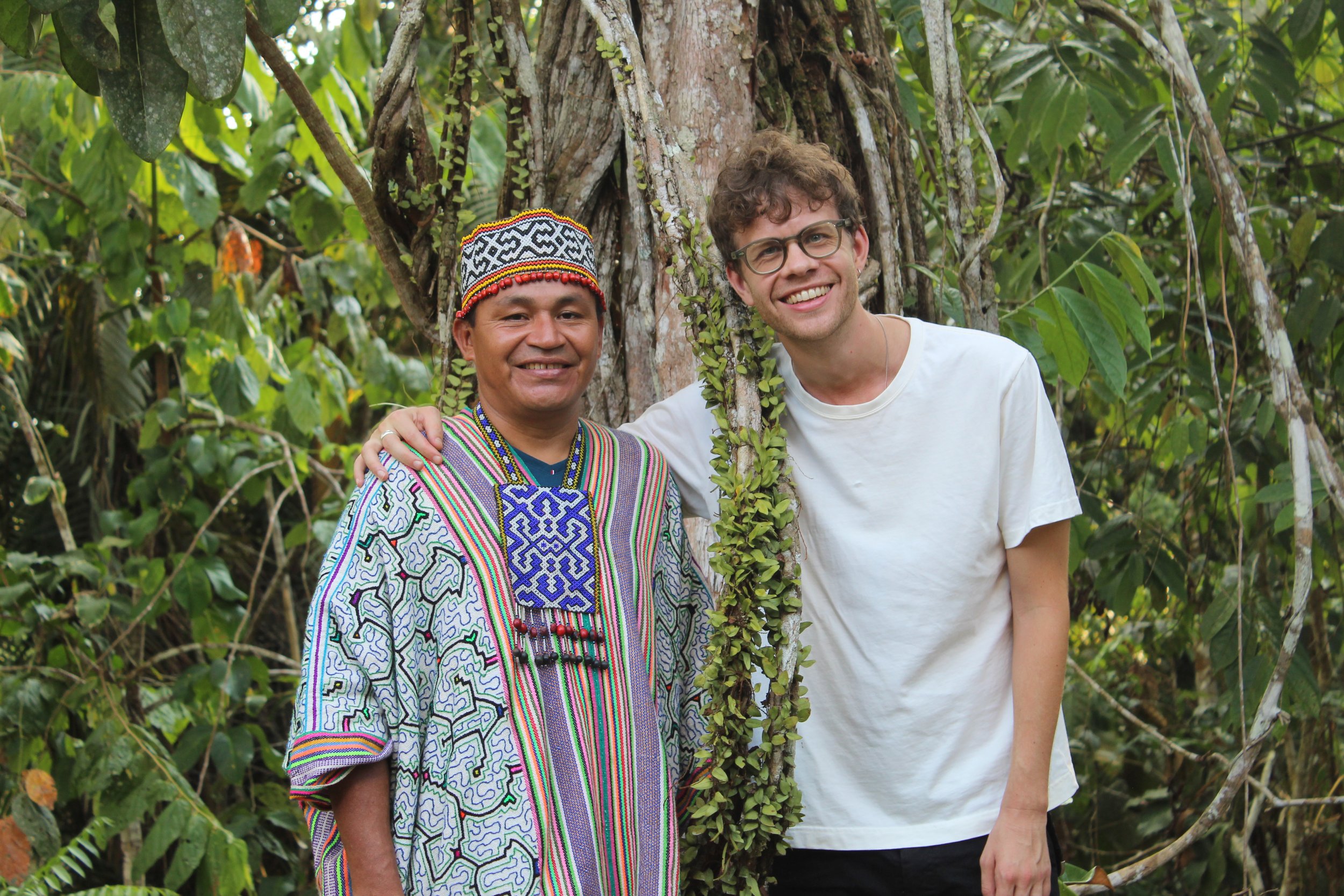
Engagement with local Indigenous communities
Dr Ruffell and Onaya Science created the Shamanic Advisory Board as a platform for traditional healers to advise on the scientific research they feel should be conducted. The board is comprised of Indigenous members, as well as a range of individuals who have dedicated their lives to learning about and translating Indigenous knowledge.
The team aims to uphold the Indigenous voice at each step of the research process, from the inception of research questions and areas of study, to the development of the instruments and metrics used to quantify change in the research, as well as how the findings are analysed, interpreted, and disseminated.
-

Supporting Indigenous communities globally
Dr Ruffell and Onaya Science are honoured to be official collaborators with the Yorekna Tasorentsi Institute, an Indigenous-led Institution that integrates traditional knowledge with modern techniques as a response to current planetary challenges. Relatedly, Dr Simon Ruffell and Onaya will be supporting the World Ayahuasca Forum (11-13 September 2026), an Indigenous-led, intercultural gathering intended to build a global alliance around the future of ayahuasca, bringing Indigenous leaders, communities, scientists, practitioners, policymakers and allies together to address Indigenous sovereignty, ethics, safety, regulation, research, cultural protection and the ecological and cultural consequences of ayahuasca's globalization.
“By having an understanding of plants such as ayahuasca from both an Indigenous and a Western viewpoint - getting a sense of how these ways of thinking work together and where they don’t - perhaps we will come to a richer understanding of what the Shipibo healers refer to as plant teachers.”
— Dr Simon Ruffell